
Pulaski County Arrest Warrants Explained
An arrest warrant is judicial process, and Virginia builds it one step at a time. A complaint comes first. The complainant, or a witness, is examined under oath. A magistrate then decides whether the sworn facts add up to probable cause, and only then does the warrant issue. It must name the person and the offense, and it directs an authorized officer to act. The warrant also belongs to a court case. The clerk of that court holds the file, so Pulaski County residents with questions should start there. Virginia's public statewide case search can help you find a supported case, but it is not a complete warrant database. Ask the court directly to confirm the process entry and its current status.
Pulaski County Complaints Reach a Magistrate
A complaint can come from law enforcement or from any other complainant. Under Virginia Code section 19.2-72, a judicial officer examines the complainant or the witnesses under oath and issues process only when probable cause is found. That review happens before anything authorizes an arrest, and it is not a public vote or a roster entry. The statute also spells out what the warrant must contain and who may execute the order. A clerk in Pulaski County can locate the court case tied to it, and the magistrate's process record explains how the initial decision was made. Read the code itself for the full complaint and probable-cause process.
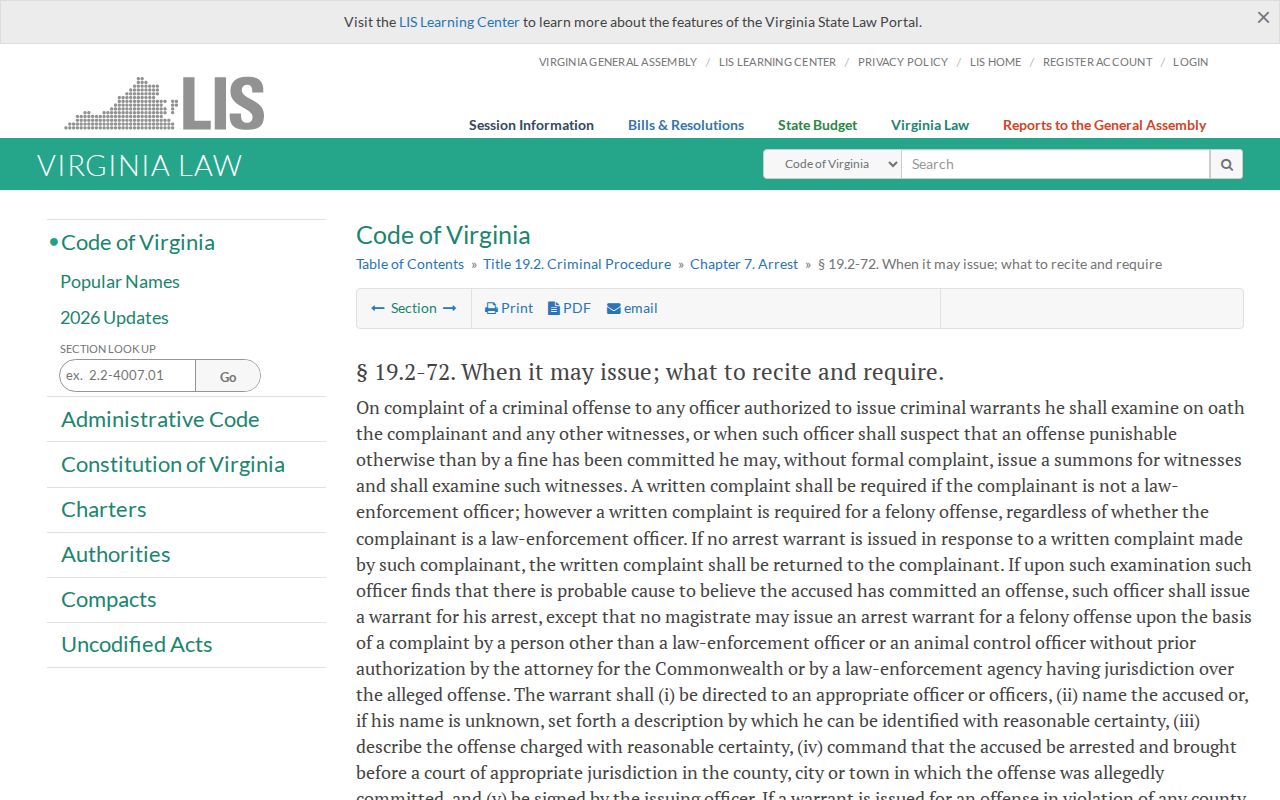
Pull up the statute alongside the Pulaski County case file and ask the court directly about the order in question.
Inside a Pulaski County Arrest Warrant
Virginia Code section 19.2-72 sets the complaint and warrant requirements. A public case result is not the warrant itself. Details do not all appear online. The case number, charge, court, and order date help the Pulaski County clerk pull the right file fast, and a judicial officer can explain the terms that govern the order.
| Case number | Use the court's case identifier; no local warrant-number format was verified. |
|---|---|
| Person named | Compare identifying details through the court, not a partial-name match alone. |
| Offense | The alleged offense tied to the complaint and order. |
| Issuing authority | Magistrate or other authorized judicial officer, with the court file identified. |
| Execution direction | The warrant states the action authorized and officer responsibilities. |
| Order date | Ask the clerk whether later docket entries changed the status. |
Pulaski County Warrant Contents Identify the Case
Virginia's required warrant information identifies the person, the offense, and the issuing authority, with directions for execution. A public case index may show only part of that. The signed order is the controlling paper. When you ask the clerk, bring the case number and the name shown on the complaint, then ask how to request the warrant or any return entry open to the public. A judge or magistrate, not a case screen, settles what the Pulaski County order actually says.
Serving Arrest Warrants in Pulaski County
Several agencies can execute process in Pulaski County. The sheriff, town police, Virginia State Police, jail officers, and other authorized officers may act according to the order's terms. The Sheriff's Civil Process and Court Services Division handles court security plus custody and transport functions. Which agency moves depends on the order and the law. The sheriff's general contact line is not a public warrant search. After an arrest, the person may go before a magistrate for an initial bail hearing and later be booked at the regional jail. A magistrate can set a bond type or find someone ineligible for bail. The case stays with the issuing court, and its clerk can explain the next setting. Federal matters run on a separate track; the Western District's Roanoke court location is the federal reference for this region.
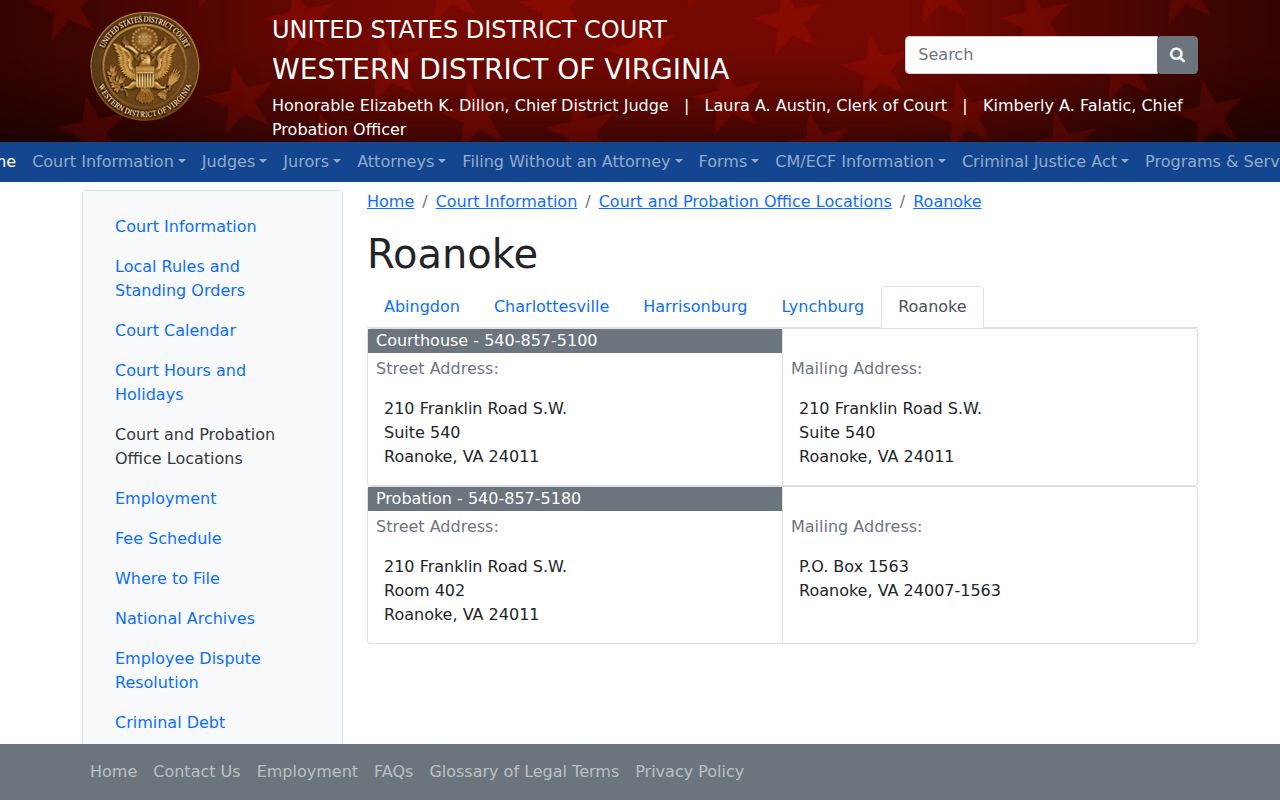
A federal case does not show up in a Pulaski County court search. Check the federal docket instead.
Pulaski County Warrant Service Has Several Agencies
Who serves a warrant in Pulaski County? The sheriff, a town police officer, Virginia State Police, or another officer authorized by law. The order's direction and the officer's authority govern the choice. The Sheriff's Civil Process and Court Services page describes court security, court orders, and custody or transport work, but it does not list open warrants. Take case questions to the issuing clerk. Questions about local service status can be routed through the Criminal Warrants Clerk at 540-994-5349. No single office performs every arrest in the county, and the Sheriff's division page lays out its court-related duties.

The sheriff page describes its service role without publishing a public active-warrant list.
Comparing Arrest, Summons, and Bench Warrants
A summons tells a person to answer a charge or appear. It does not direct immediate custody. An arrest warrant follows a probable-cause finding, while a bench warrant or capias answers a court obligation, often a missed appearance. Read the document and ask the issuing court in Pulaski County which process sits in the file.
| Feature | Arrest Warrant | Summons | Bench Warrant |
|---|---|---|---|
| What it orders | Arrest under the warrant's terms | Appear or answer as directed | Custody or action after a court obligation |
| Basis | Probable cause on a complaint | Charge or process allowing an appearance | Failure to appear or comply |
| Who issues it | Magistrate or authorized judicial officer | Court or authorized officer | Judge handling the pending case |
| How to respond | Confirm the case and seek legal advice | Appear by the listed date | Ask the court about appearance or recall |
Pulaski County Capias and Arrest Process Differ
In Pulaski County, a capias and an arrest warrant can both put a person in custody. They start differently, though. A capias shows up later in a case, often after an indictment or presentment. An arrest warrant grows out of a probable-cause complaint instead. The paper trail differs too. The Circuit Clerk holds felony indictments and circuit capiases, while the General District Clerk handles local misdemeanors and traffic cases. To learn which order sits on a Pulaski County docket and what step is open, ask the court that owns the case; a statewide case entry may list the case but say nothing about whether a capias has been served or recalled. Virginia Code section 19.2-232 spells out the capias and summons process that follows an indictment or presentment.
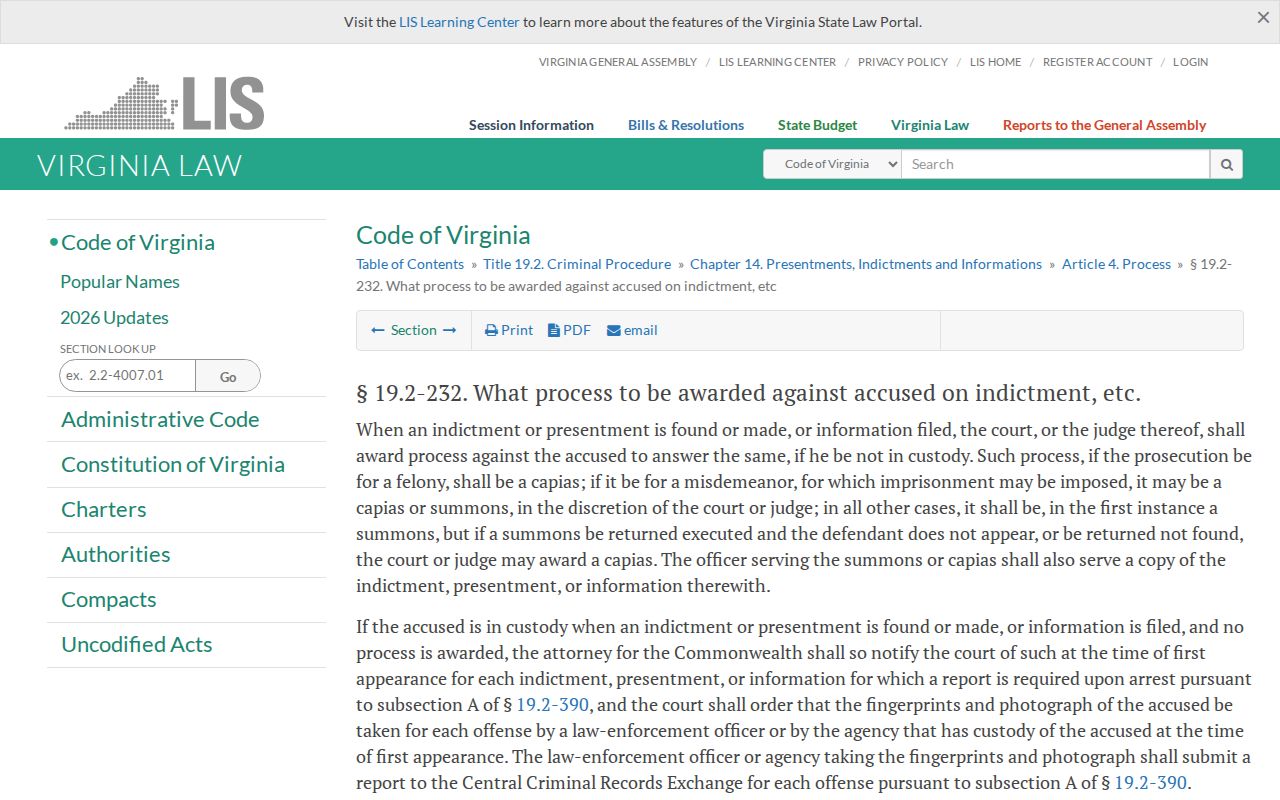
The court clerk can identify which process applies to the existing case.
If There's an Arrest Warrant for You
Start with a call to the clerk. Ask the court to confirm the case and the process recorded on it. A lawyer can then advise whether to seek a recall, set an appearance, or work through bond or surrender in Pulaski County. Treat online results with care. A listing may be stale, and paying a fee does not by itself close the order. Only the court controls the case and any change to its warrant. If an arrest has already happened, New River Valley Regional Jail posts custody and bond information, though the jail decides nothing about the charge and cannot recall court process. After release or court action, confirm with the issuing clerk that the Pulaski County docket reflects the change.
Important: The issuing judge or magistrate controls warrant process and bond decisions. Verify the court and speak with a Virginia attorney before deciding how to respond.
Pulaski County Warrant and Bond Questions
Bond in Pulaski County can take several forms. A magistrate may set personal recognizance, unsecured, or secured bond, or may rule a person ineligible for bail. A judge can revisit that later. The regional jail explains these categories for someone in custody, but only the court or magistrate sets terms in a given case. So ask counsel or the court first. Find out whether bond, a new appearance, or another step applies before you arrange travel. If the person is already in custody, use the jail's official bonding page and confirm the underlying case with its issuing court. New River Valley Regional Jail bond guidance lays out the release categories.
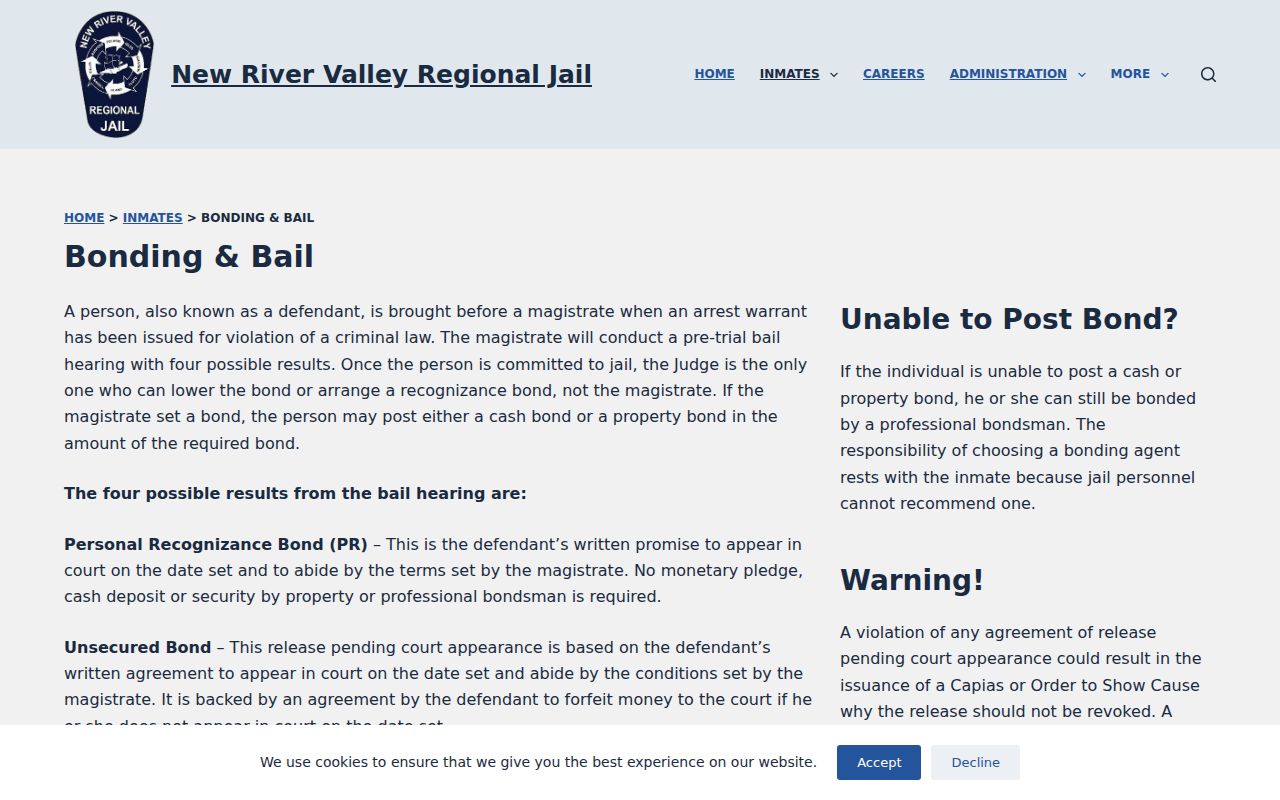
Custody and bond details do not replace the court's process record.