
Pulaski County Municipal Court Warrants
Pulaski County has two incorporated towns, Pulaski and Dublin. Their charters preserve local police-court or police-justice language for town ordinances, but that wording does not establish a modern public warrant database. The current General District Court schedule routes both towns' police traffic and criminal sessions through the county court.
Do not assume that every ordinance matter uses the same route. Identify the charge and court from the citation, then ask the clerk where it is filed. No separate public municipal warrant portal was located for either town.
Pulaski County Municipal Warrant Docket Routes
Pulaski's charter describes town ordinance and investigative authority, while the current public GDC schedule lists Pulaski Police traffic and criminal sessions in the county court. The schedule is the stronger current public route for those cases. It does not prove that every town ordinance matter uses the same process.
For a Pulaski Police citation, search the GDC case system and call the clerk if the case or court date is unclear. The town's department directory identifies Pulaski PD as its primary law-enforcement agency. No separate town warrant portal was located.
Pulaski's official charter explains the town powers and court references.
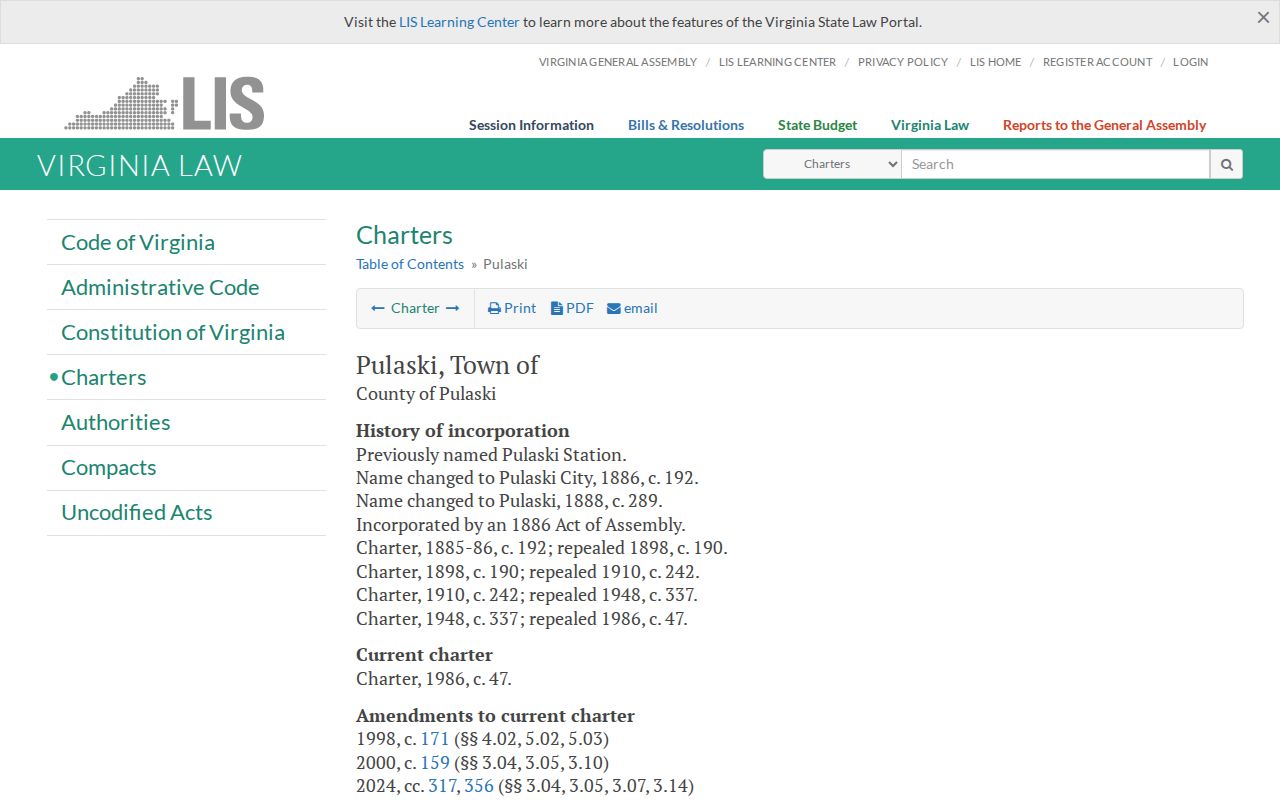
Read charter language with the current clerk schedule before deciding where a case is filed.
Pulaski County Cities With Municipal Courts
The county's incorporated places are the Town of Pulaski and the Town of Dublin. Both have a police department, but the official review found no public city warrant search or separate current municipal docket portal. Pulaski GDC is the public search and clerk route for town police traffic and criminal sessions.
| City | Court | What It Handles |
|---|---|---|
| Town of Pulaski | Pulaski General District Court for listed traffic and criminal sessions | Town ordinance powers appear in the charter; confirm the current case route. |
| Town of Dublin | Pulaski General District Court for listed traffic and criminal sessions | The charter mentions a police justice and issuing justices; ask the clerk about a specific ordinance case. |
Dublin's Charter Warrant Language Needs Context
Dublin's charter section 5.1 gives the mayor or police justice power over town ordinance cases and describes issuing justices. That local charter language is useful background, but it is not proof of a current public online docket or warrant search. The modern GDC schedule lists Dublin Police traffic and criminal sessions through Pulaski General District Court.
When the citation names Dublin, check the GDC route first and ask the clerk whether the case is a town ordinance matter handled under another current procedure. Do not assume that the charter creates a public town roster.
Dublin's official charter contains the police-justice and issuing-justice language.
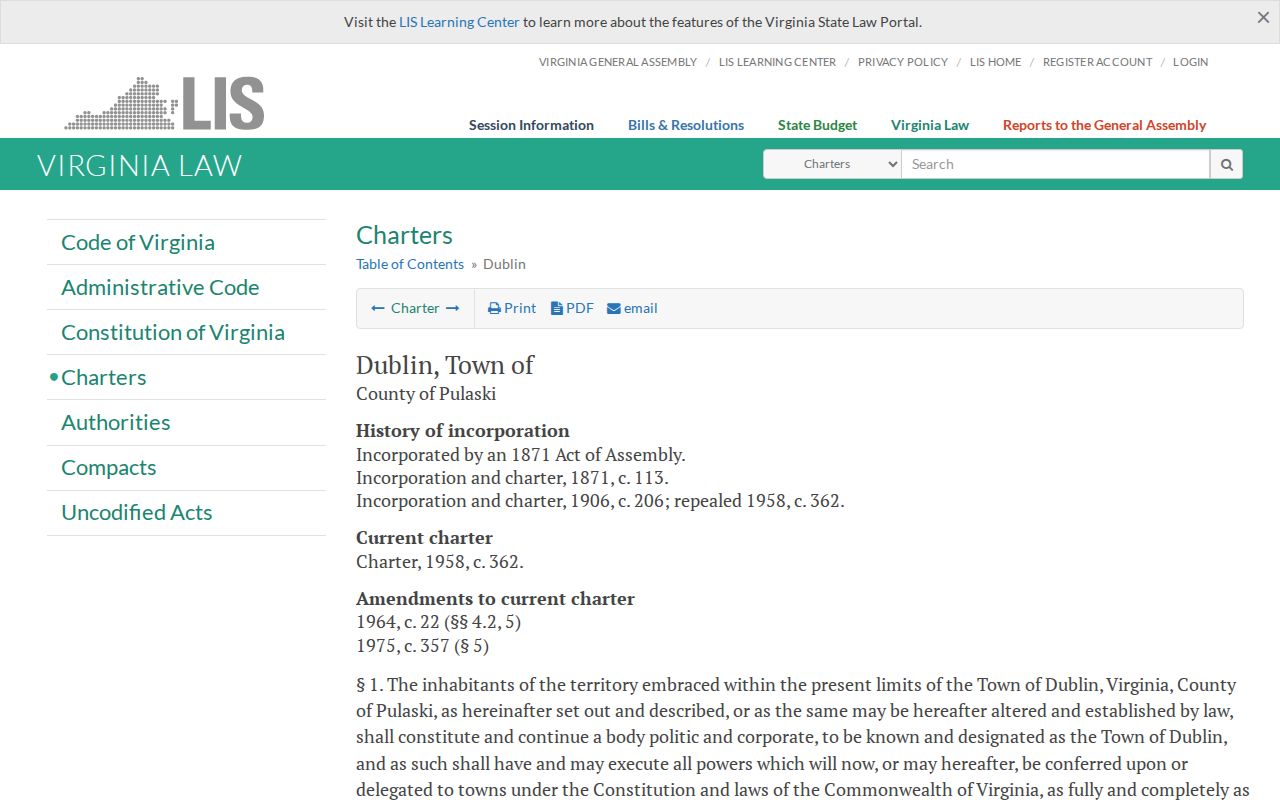
The charter is historical and legal context; call the clerk about a present-day case.
Checking a Municipal Court Warrant
Use the citation to identify the town, issuing agency, and court. Search Pulaski GDC by the case number, last name, or hearing date. The system supports current, archived, and all records, but a case search is not a complete warrant register. Call the clerk if the online result shows a missed date or does not explain the process.
- Read the citation for the town, issuing agency, court, and case number.
- Search Pulaski General District Court if it lists a town police traffic or criminal matter.
- Call the GDC Clerk at 540-980-7470 when a record is unclear or missing.
- Contact the named town police department for agency questions, then ask counsel about court action.
Pulaski County Town Warrant Search Starts With Court
Neither town's official pages produced a public warrant search, active roster, or town citation payment portal. The public route for ordinary town police traffic and criminal sessions is the county General District Court search and clerk. Use the town police department to clarify which agency issued a citation, not to infer that it holds the court's docket.
For Pulaski, the town department page confirms Pulaski Police is the primary agency. The linked direct police page was not retrievable during research, so its current phone and warrant procedure remain unverified. Call the town through its current official site if that agency detail matters.
The Town of Pulaski departments page identifies its police department.
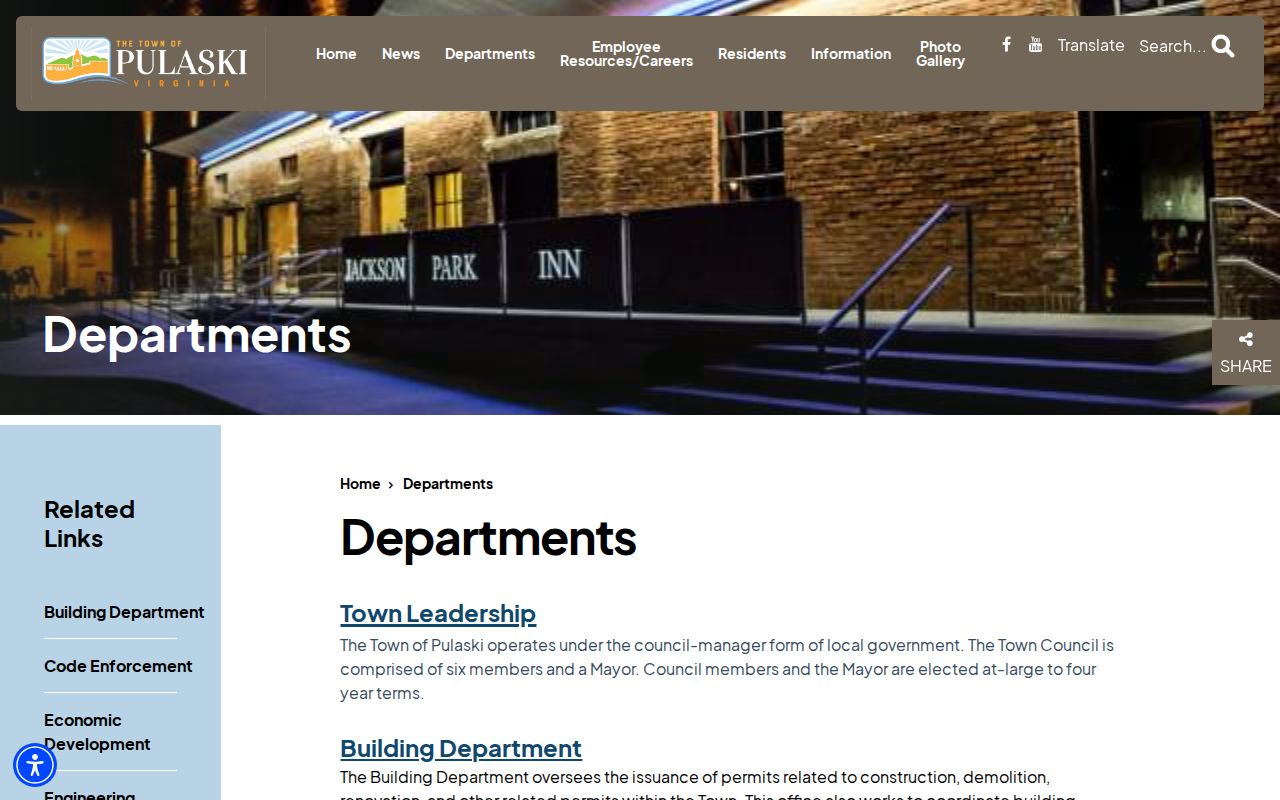
The town page confirms the agency but does not provide a public warrant lookup.
Inside a Municipal Court Warrant
No town warrant sample was available to inspect. The GDC case system can show the underlying court case and docket controls, while the town charter may describe authority without exposing a current warrant record. Use the case number and hearing date to ask the clerk about the process entry.
| Case number | Use the GDC identifier when the case is on its docket; no local warrant format was verified. |
|---|---|
| Charge or ordinance | Read the citation and ask whether it is a town ordinance or another case type. |
| Court | Confirm the court named on the case and the office that holds the file. |
| Hearing date | Compare the date on the notice with the case docket. |
| Process status | Ask the court whether a warrant, capias, or recall has been entered. |
Dublin Warrant Records and FOIA Access
Dublin's FOIA route can be used to ask for an existing town record that is not otherwise available. A written request goes to the town's FOIA officer, Trenton G. Crewe, at P.O. Box 1066, 101 Dublin Park Road, Room 203, Dublin, VA 24084. It should identify the requester and describe the record with reasonable specificity.
Active investigations, minor information, confidential material, and private details may be excluded; actual costs may apply. A request does not require the town to create a new warrant list or give legal advice. Court case records should go to the relevant court clerk.
Dublin's FOIA page gives the request instructions.
Use the town's written-request details for existing Dublin records, subject to legal limits.
How to Resolve a Municipal Court Warrant
Call the issuing court before sending payment or appearing at a town office. Ask whether the case needs a new date, a continuance request, a judge's review, or a magistrate and bond hearing. The town or county clerk can identify the record, but only the court can change its process. The research did not locate a separate local payment or recall portal.
- Confirm the court and case number with the clerk.
- Ask whether payment is allowed or the court requires a new appearance or motion.
- Get counsel's advice about a hearing, recall request, or bond direction.
- After court action, ask when the case and process status will be updated.
Warning: Charter language does not create a separate town warrant portal. Confirm the docket with Pulaski General District Court or the proper clerk before paying or appearing.
Pulaski County Warrant Recall Stays With Judge
The agency that serves a warrant does not decide whether to recall it. A judge or the court handling the case controls later process. Town police, the sheriff, and state police may serve orders according to law; the clerk can direct a filing or explain the docket entry.
For local execution or service questions, the Joint 9-1-1 page lists the Criminal Warrants Clerk at 540-994-5349. Ask the issuing court about recall, payment, a new date, or a hearing. Do not treat a phone routing contact as authorization to walk into an office or surrender.
The Joint 9-1-1 Warrants Department listing is the official county contact source.
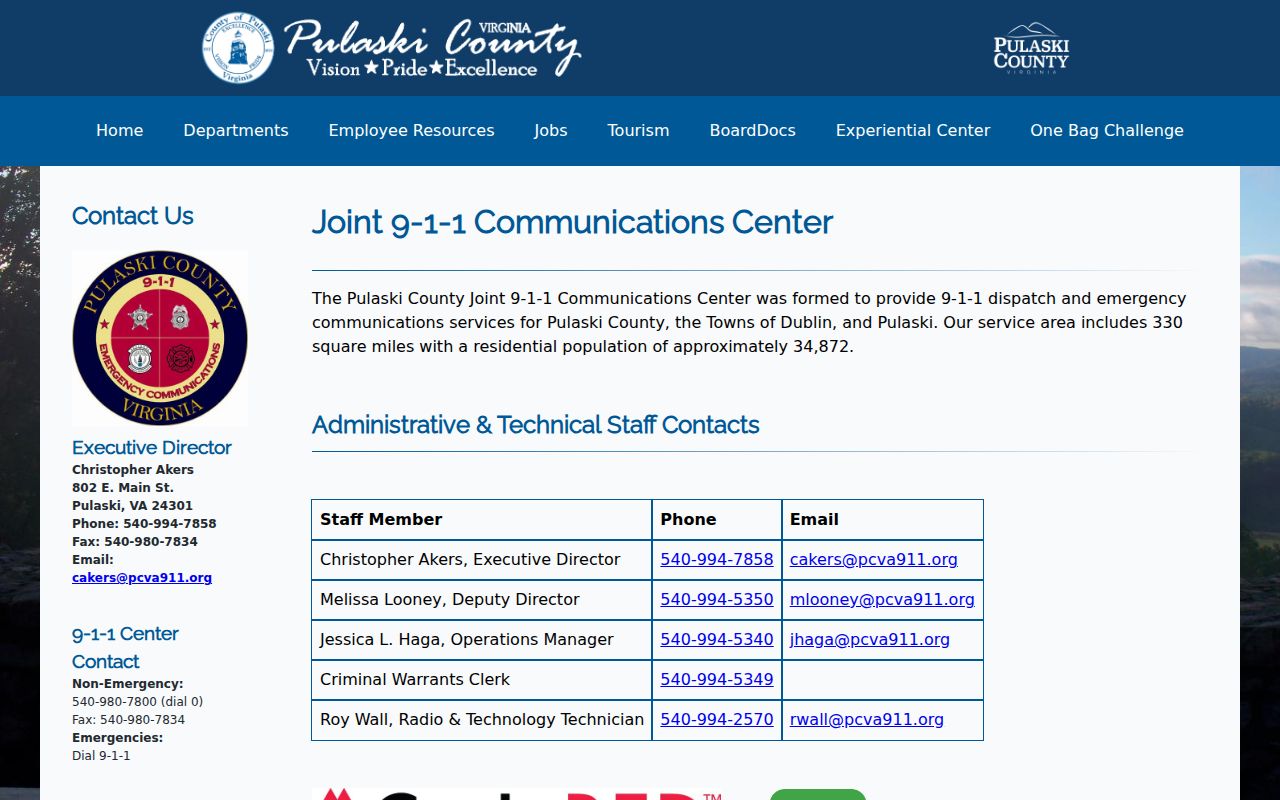
The warrants contact routes status questions; a court order is needed to change process.