
Checking for a Warrant in Dublin
Dublin's official police page identifies the department as the town's primary law-enforcement agency, but it does not display a warrant search or direct police phone. The practical public route for traffic and criminal cases is Pulaski General District Court. Dublin's charter also describes a police justice and issuing justices for some town matters.
Read the citation for its court, case number, and issuing officer. Search the GDC record by last name, case number, or hearing date. Ask the clerk whether a docket entry belongs to a Dublin Police case or a town-ordinance process under the charter.
- Check the Dublin Police page for town agency information; no warrant lookup was shown.
- Search Pulaski General District Court if the citation points to traffic or criminal court.
- Call the GDC Clerk with the case number or hearing date when a result is unclear.
- Ask the town or clerk whether a local ordinance matter follows a separate route.
- Use the county process route below if the court directs a service-status question there.
Dublin Warrant Search and Charter Authority
Dublin's charter section 5.1 describes mayor or police-justice authority for town ordinances and allows issuing justices to handle warrants or process. The language is important local context, but it does not show that the town keeps a public web roster. The current public docket route for Dublin Police traffic and criminal matters is Pulaski General District Court.
When a citation names a town ordinance rather than traffic or criminal court, call the clerk before assuming which court has the file. A case number and the town name help sort that out.
Dublin's official charter contains the police-justice provisions.
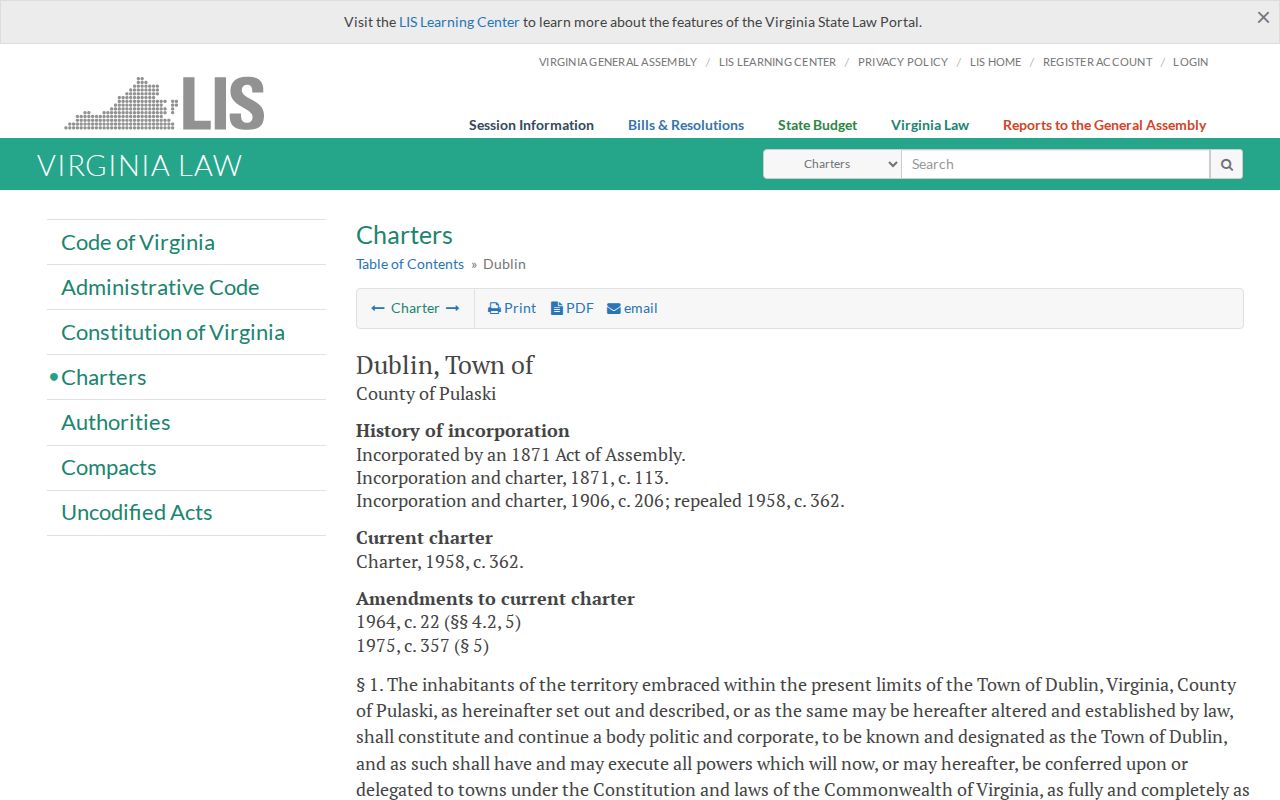
The charter gives context; the court clerk confirms the current route for a particular case.
Dublin Police and Municipal Court
Dublin Police is the town's primary law-enforcement agency. Its official page describes a chief, an administrative office manager or sergeant, and a uniform patrol division. The page does not show a warrant search or direct police phone, so a current contact should be confirmed through the town site.
The charter describes local police-justice powers, while the public GDC schedule lists Dublin Police traffic and criminal sessions in Pulaski General District Court. The clerk can reconcile the route for a specific citation.
Dublin's Current Docket Route Through GDC
The current Pulaski General District Court schedule lists Dublin Police alongside Pulaski Police, the Sheriff's Office, and Virginia State Police for traffic and criminal sessions. This modern schedule is the practical public case route for those matters. It should be read with the charter rather than treated as proof that every town ordinance matter is in GDC.
Use the court named on the citation and confirm with the clerk before visiting a town office. The docket is searchable one court at a time, and a search result does not show every service detail.
The Pulaski GDC page lists the schedule and clerk information.
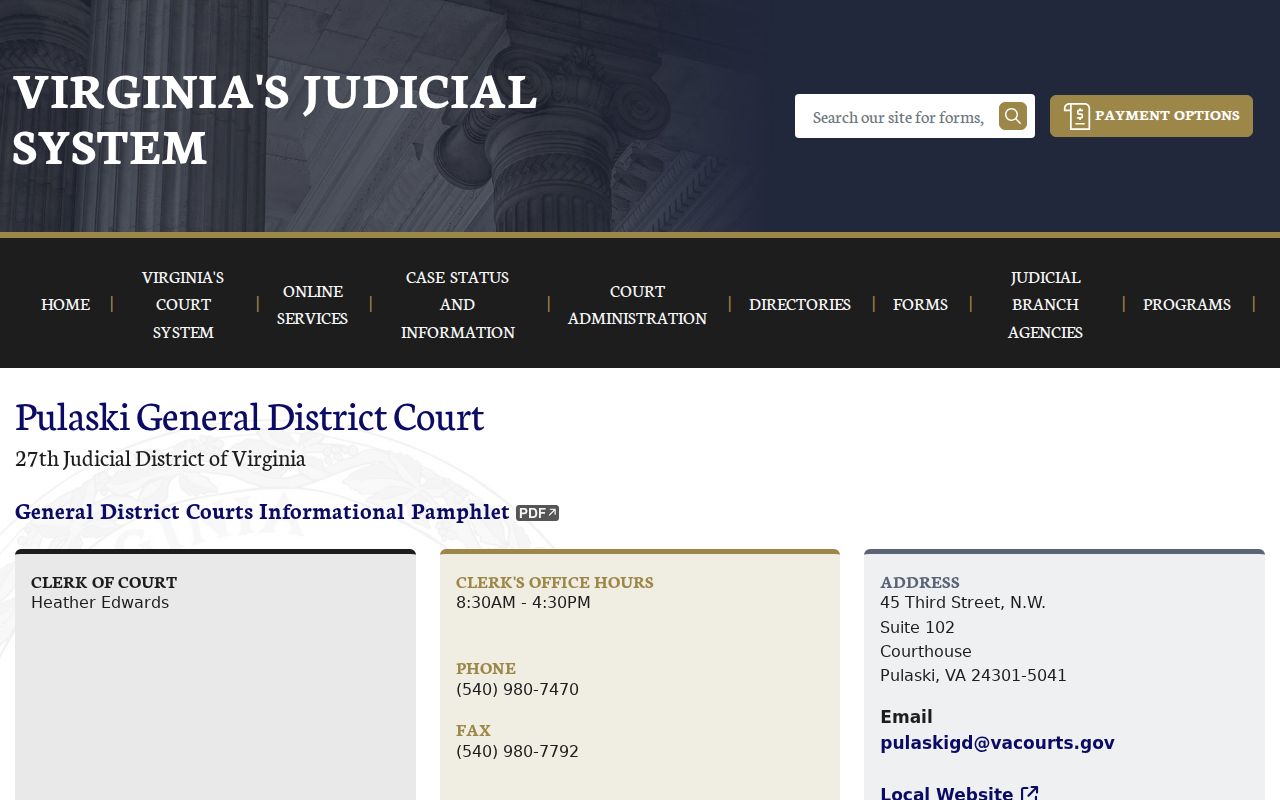
The county docket is the public route for listed Dublin Police traffic and criminal matters.
Dublin Warrant Types
A Dublin citation can involve traffic, a criminal case, or a town ordinance. A missed appearance may add court process to an existing matter. An arrest warrant starts with probable-cause review by an authorized judicial officer. Since no town roster is published, begin with the issuing court and ask which record contains the process.
| Warrant Type | How It Arises | Who Issues It |
|---|---|---|
| Traffic process | Summons noncompliance or missed traffic setting, under Virginia rules | Pulaski General District Court for listed Dublin Police sessions |
| Town ordinance | Local ordinance matter under charter authority | Ask whether the town police-justice route applies now |
| Failure to appear | Missed required court setting | The court holding the case |
| Arrest warrant | Complaint and probable-cause review | Magistrate or authorized judicial officer |
Dublin Police Has No Warrant Search Form
The official Dublin Police page describes the department's chief, administrative office manager or sergeant, and uniform patrol division. It does not display a direct police phone or an online warrant search. No active-warrant list or town citation portal was located.
The town's official site gives department navigation and a general contact route. The police page is useful to identify the agency, while General District Court is the public place to search a traffic or criminal case. Ask the town to confirm a current police contact if an agency question remains.
Dublin Police's official department page describes its structure.
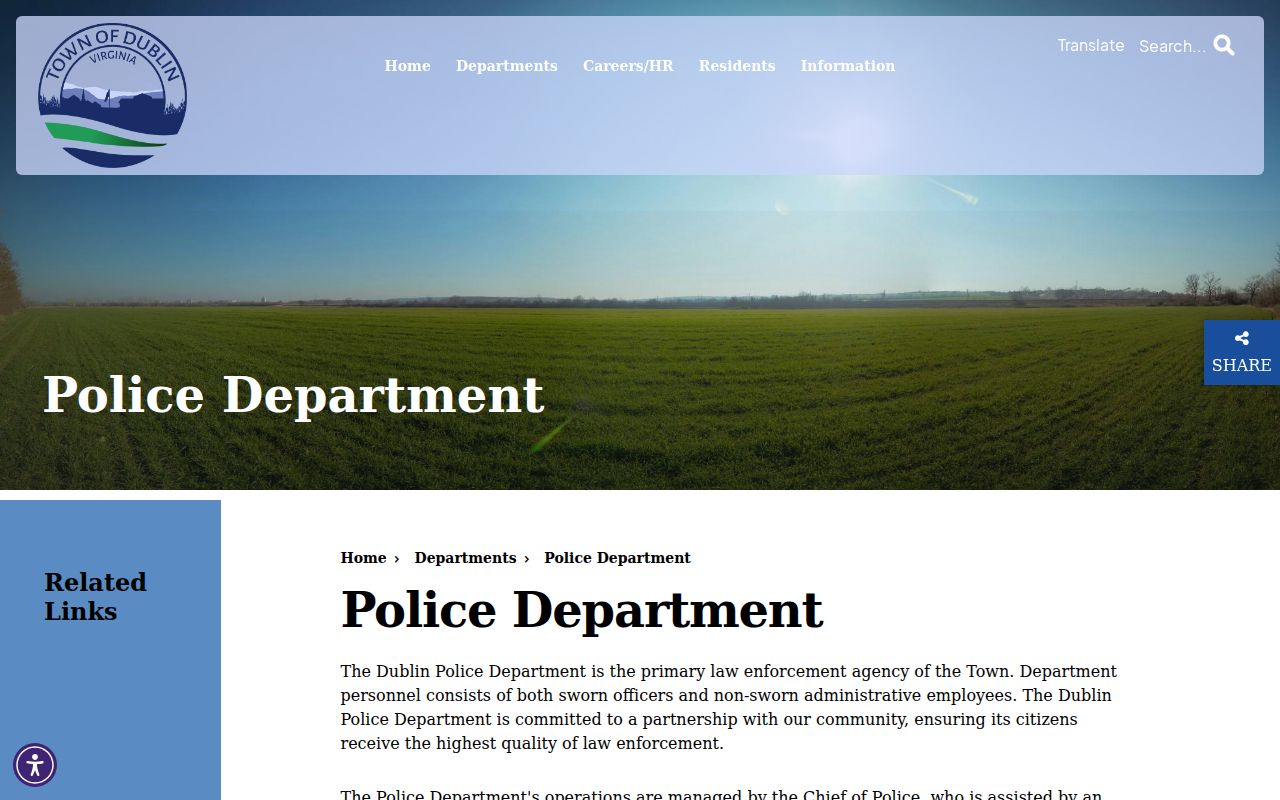
The department page describes the agency but does not provide a warrant lookup or direct phone.
Inside a Dublin Warrant Record
No Dublin town warrant record was safely available to inspect. General District search results can show case number, case type, name, hearing date, and docket details. They may not display every process or service fact. The clerk can explain whether a case is a Dublin Police session or a town-ordinance matter.
| Case number | GDC examples use GT for traffic and GC for criminal matters; no Dublin warrant format was verified. |
|---|---|
| Name | Use the citation spelling, then narrow results with other available fields. |
| Charge or ordinance | Read the entry beside the court and hearing date. |
| Court | Confirm whether the case is in Pulaski GDC or follows a town ordinance route. |
| Process status | Ask the clerk whether a warrant, capias, or recall is recorded. |
Dublin Town Warrant Records and FOIA
Dublin's FOIA officer is Trenton G. Crewe. A written request can go to P.O. Box 1066, 101 Dublin Park Road, Room 203, Dublin, VA 24084. It should give the requester's contact details and identify the existing record with reasonable specificity. The town notes that actual costs may apply.
Active law-enforcement work, investigations, minors, confidential information, and private details may be excluded. Ask for a town record that already exists; court case files should go to the court clerk. A FOIA request does not require Dublin to assemble a new warrant list.
Dublin's FOIA page sets out its request rules.
Use the official town channel for existing local records, subject to access limits.
How Dublin Warrants Fit the County System
Warrant flow: Dublin Police or town ordinance matter › Pulaski General District Court when listed › local execution-status route if the clerk directs. Search Virginia's court case system and call the GDC Clerk at 540-980-7470. For status routing, the county Criminal Warrants Clerk is 540-994-5349. The statewide system covers supported cases, not a warrant-only registry. For county-wide steps, use Pulaski County warrant records.
Dublin Regional Jail Does Not Issue Warrants
New River Valley Regional Jail is physically in Dublin at 108 Baker Road, and its phone is 540-643-2000. The facility serves a regional area. Its inmate lookup is a custody screen, and its bonding page explains release categories after arrest. The jail is not Dublin's court and cannot recall town process.
The jail's bond guidance is for custody questions after arrest.
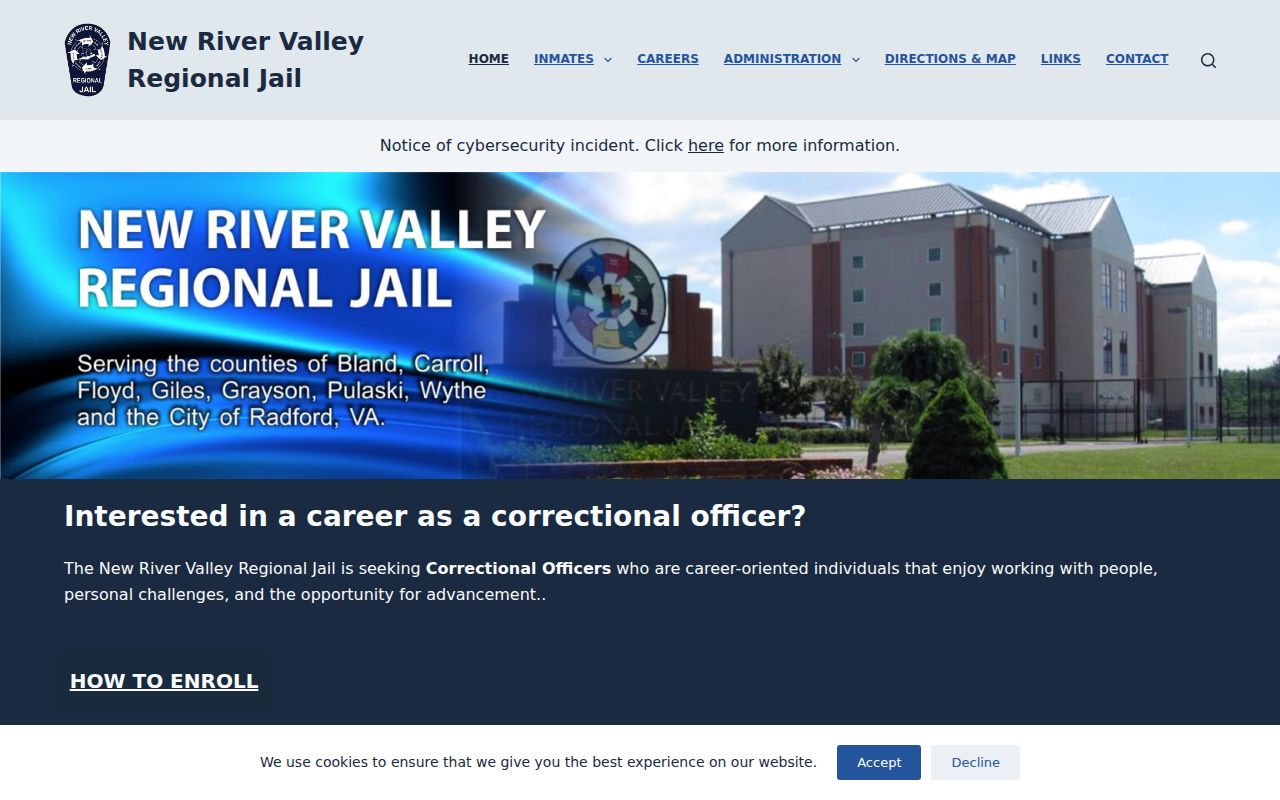
Dublin's regional jail and its court process are separate systems.
Dublin Warrant Records and Public Access
Dublin's FOIA page accepts requests for existing town records when the request names them with reasonable specificity. Active investigations, confidential information, minors, and private details can be excluded, and actual costs may apply. Court case files go to the court clerk. A request will not make the town create a new warrant list or a legal opinion.
Key Rules:
Dublin's FOIA instructions give its written-request route and contact details.
Virginia FOIA section 2.2-3704 explains access requests, response deadlines, and charges.
Virginia Code section 16.1-301 limits inspection of juvenile law-enforcement records; Dublin-area requests must follow applicable confidentiality limits.
Dublin Citation Warrants Need Court Verification
A Dublin citation may lead to a public General District Court case, while an ordinance matter may need a clerk to interpret the charter route. Search by case number or date, then call the GDC Clerk. If a separate town record is needed, use the town's FOIA instructions rather than assuming the case index contains it.
For a traffic matter, keep the cited agency and hearing date close. The Pulaski County traffic warrant page explains why an unpaid ticket, missed date, and license action are separate questions.